

OEM/ODM Program Design
Conclusion: A professional injection pen OEM project should be separated into existing-platform customization, modified-platform development and new-tooling development before quotation, because each route has different cost, MOQ, timeline and validation risk.


OEM/ODM Customization Process
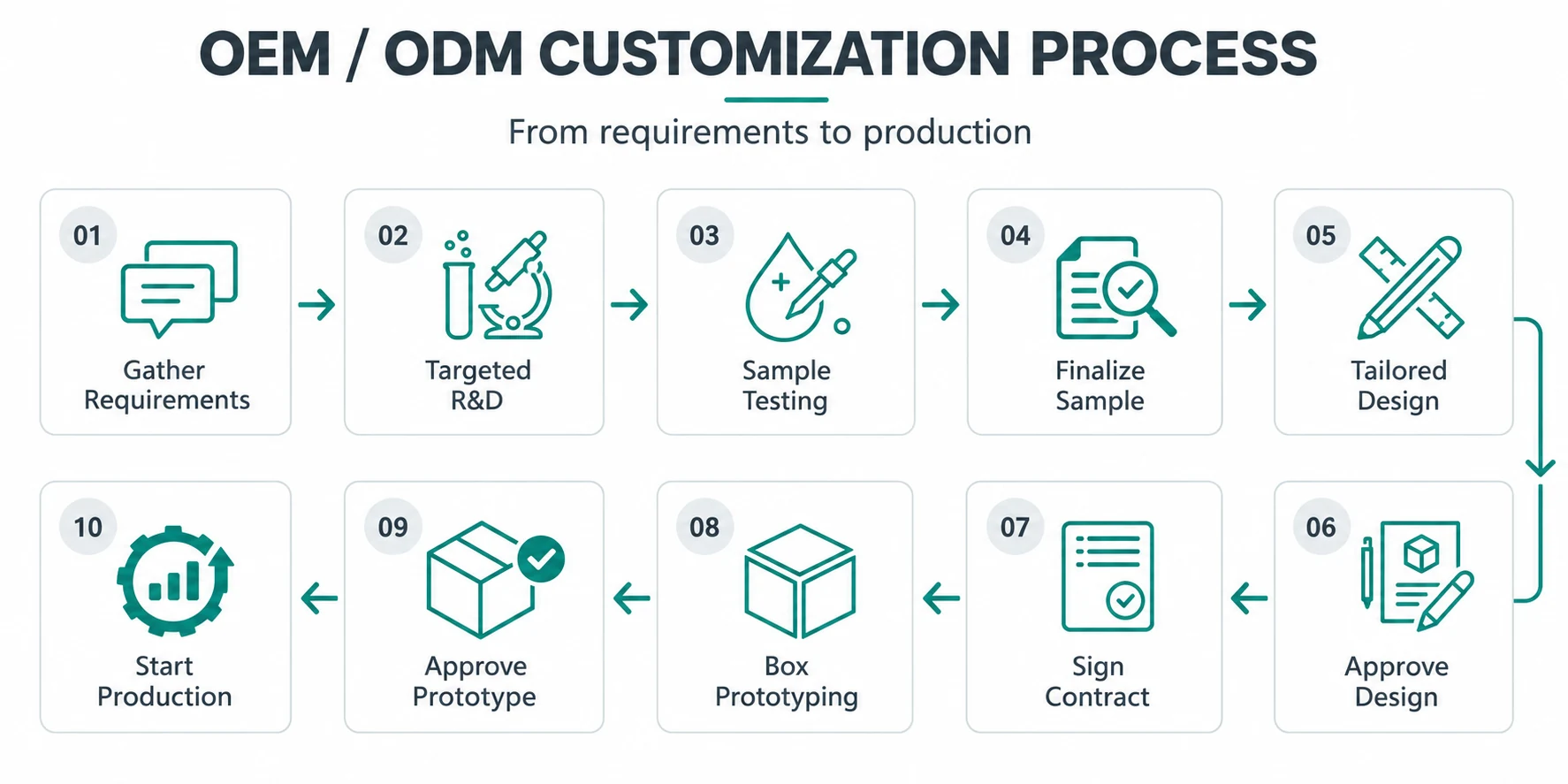
- Gather Requirements
- Targeted R&D
- Sample Testing
- Finalize Sample
- Tailored Design
- Approve Design
- Sign Contract
- Box Prototyping
- Approve Prototype
- Start Production
Workflow With Deliverables
| Stage | Buyer Input | Supplier Output |
|---|---|---|
| Requirement review | Model type, reservoir, dose range, annual quantity, target market and packaging scope. | Recommended platform route, missing-information list and initial feasibility comments. |
| DFM and sampling | Reference image, drawing, desired color/logo and sample deadline. | Sample plan, appearance direction, mechanism boundary and estimated timeline. |
| Pilot and production | Approved sample, artwork, inspection criteria and export details. | Batch production, inspection summary, photos and shipping document coordination. |
Customization Boundaries
Medicine-specific device feasibility inputs
A peptide or insulin device inquiry should begin with the exact intended product presentation and market. The formulation owner supplies the concentration, required delivery specification and primary-container information; the device proposal should state which inputs have been assessed and which are still missing. Similar appearance or nominal reservoir volume does not establish compatibility. Separate an empty device, a prefilled assembly and a finished medicine product in the supply discussion. Agree who controls the formulation, filling, container qualification, device verification, final labeling and authorization. A feasibility response can identify candidate routes without claiming that testing is complete. Refer to the application guides for medicine-specific questions, then attach the relevant drawings and responsibility matrix to the inquiry. Samples should identify their purpose and revision, with clear limits on what can be inferred from an appearance or engineering demonstration.
Review peptide and insulin injector pen applications · Prepare an evidence request
Send a Project Brief
Share reservoir, dose range, target market, estimated annual quantity, packaging language and documentation expectations. We will recommend whether an existing platform, modified platform or new-tooling route is the better fit.
Procurement questions
These answers distinguish a proposed OEM device program from a finished medicine presentation. Use the written project specification and the exact current product labeling when confirming scope; they are not patient-use instructions.
Does this page establish compatibility with a named medicine?
No. Compatibility and finished-product suitability require the exact formulation, container, delivery requirements and supporting project evidence. A catalog direction, company document or production description alone is insufficient.
Who defines the required evidence for the finished product?
The responsible product owner and appropriate technical and regulatory specialists should define it for the configuration and market. The supplier should state which records and activities it can provide and identify exclusions or evidence gaps.