
Does a 3 mL cartridge fit every injection pen?
No. Nominal cartridge volume does not establish compatibility with an injection pen. Compatibility is a relationship between a defined container, its closure components and a specific delivery mechanism. Novo Nordisk's US NovoLog prescribing information lists 3 mL PenFill cartridges separately from prefilled pen presentations and describes their use with compatible delivery devices. That is a product-specific reference, not permission to use any similar-looking housing. For an OEM inquiry, ask for the container drawing and revision before discussing cartridge retention, stopper engagement or needle connection. A supplier should identify which proposed interfaces have been assessed and which remain assumptions. This guide addresses procurement and engineering evidence; it is not advice to refill a cartridge, extract medicine from a commercial pen or substitute a device outside the prescribed product's instructions.
What should an interface specification actually identify?
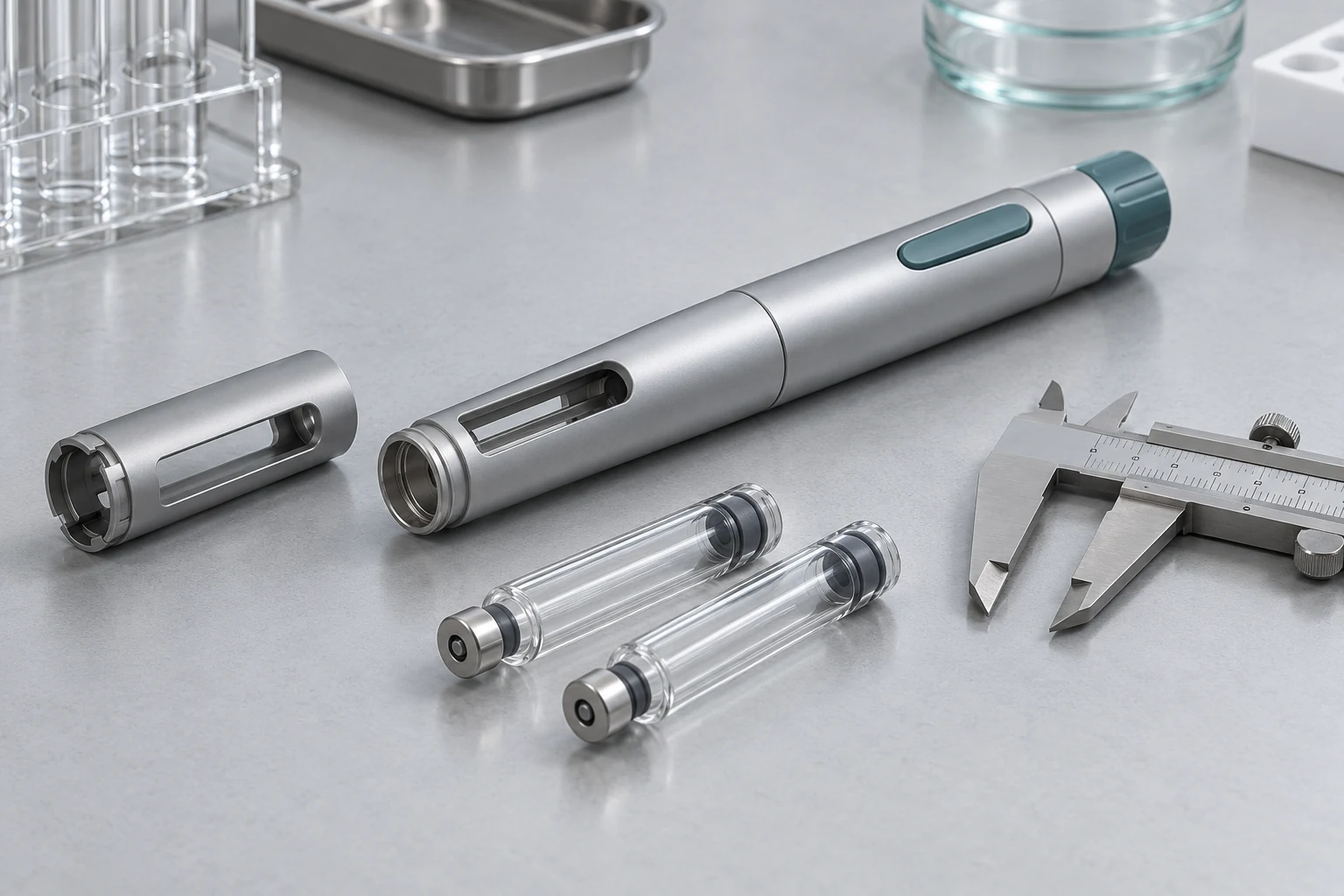
Build an interface record around controlled drawings rather than a catalog photograph. Start with the cartridge body, neck and closure geometry, then identify the stopper, cartridge holder, retention features and the mechanism that contacts the stopper. Ask which dimensions and tolerances the supplier considers functionally important and where that assessment is documented. A fit demonstration can identify an obvious mismatch, but it cannot establish delivered-volume performance, seal integrity or formulation compatibility. Record the configuration used for every sample observation, including any substitute container or test material. The following checklist is an editorial purchasing framework, not a dimensional specification or an extract of a proprietary design. Its purpose is to make missing inputs visible before a buyer treats a prototype as a qualified cartridge-device system. The responsible development team must establish the actual acceptance criteria.
Evidence request checklist
- Container manufacturer, drawing number and revision
- Body, neck, closure and stopper interface records
- Cartridge-holder retention and mechanism engagement
- Needle-interface definition and applicable restrictions
- Sample configuration and material used in demonstrations
- Evidence gaps, change owner and approval responsibility
How should buyers handle a container or stopper change?
Treat a revised container, stopper or holder as a configuration change that needs an impact assessment. Do not transfer all previous evidence simply because the outside pen body looks unchanged. The purchasing team should ask which requirements could be affected, which records remain applicable and what additional assessment is proposed. Separate mechanical fit, delivery performance, formulation-contact evidence and finished-product authorization in the response. Those are different questions and may have different owners. For example, an empty-body supplier may hold interface drawings while the formulation owner holds stability information. Neither record should be described as replacing the other. Close the review with a written list of approved inputs, unresolved questions and responsibilities, rather than an informal statement that the cartridge is standard. A reference medicine's labeled cartridge system remains distinct from the proposed OEM configuration.
Buyer FAQ
Does a matching cartridge volume prove compatibility?
No. Volume alone does not define geometry, retention, closure components, stopper behavior or delivery performance. Identify the complete container-device configuration and obtain evidence for the specific intended use.
Can a visual fit check replace functional verification?
No. It can reveal a physical mismatch but does not demonstrate delivery accuracy, formulation compatibility or suitability of the finished product. Record the purpose and limitations of each sample assessment.
Who should provide formulation-contact evidence?
Assign that responsibility explicitly to the relevant product owner and suppliers. Device drawings and container records are useful inputs, but they do not independently establish stability or compatibility with a particular formulation.
References and editorial scope
Prepared by Hytanbio Tech for B2B device procurement. Sources checked on 23 October 2026. The purchasing checklists are editorial recommendations, not supplier test data, a regulatory determination or patient-use instructions. Obtain the applicable current documents and project-specific professional assessment.