
Why is a comfortable grip not enough?
A comfortable grip is one interface feature, not evidence that an injection pen can be used safely and effectively by its intended users. FDA's human-factors guidance frames usability engineering around users, uses and use environments, with attention to reducing use-related risk. For an OEM buyer, that means describing who will operate the device, what they must do and where they will do it before accepting broad easy-to-use claims. A large window, a textured surface or an audible signal can be proposed as a design input, but its suitability still needs assessment in the intended workflow. This guide provides editorial questions for a procurement brief, not a completed human-factors study or a claim of regulatory acceptance. The responsible development team should connect interface requirements to its risk assessment and evidence plan.
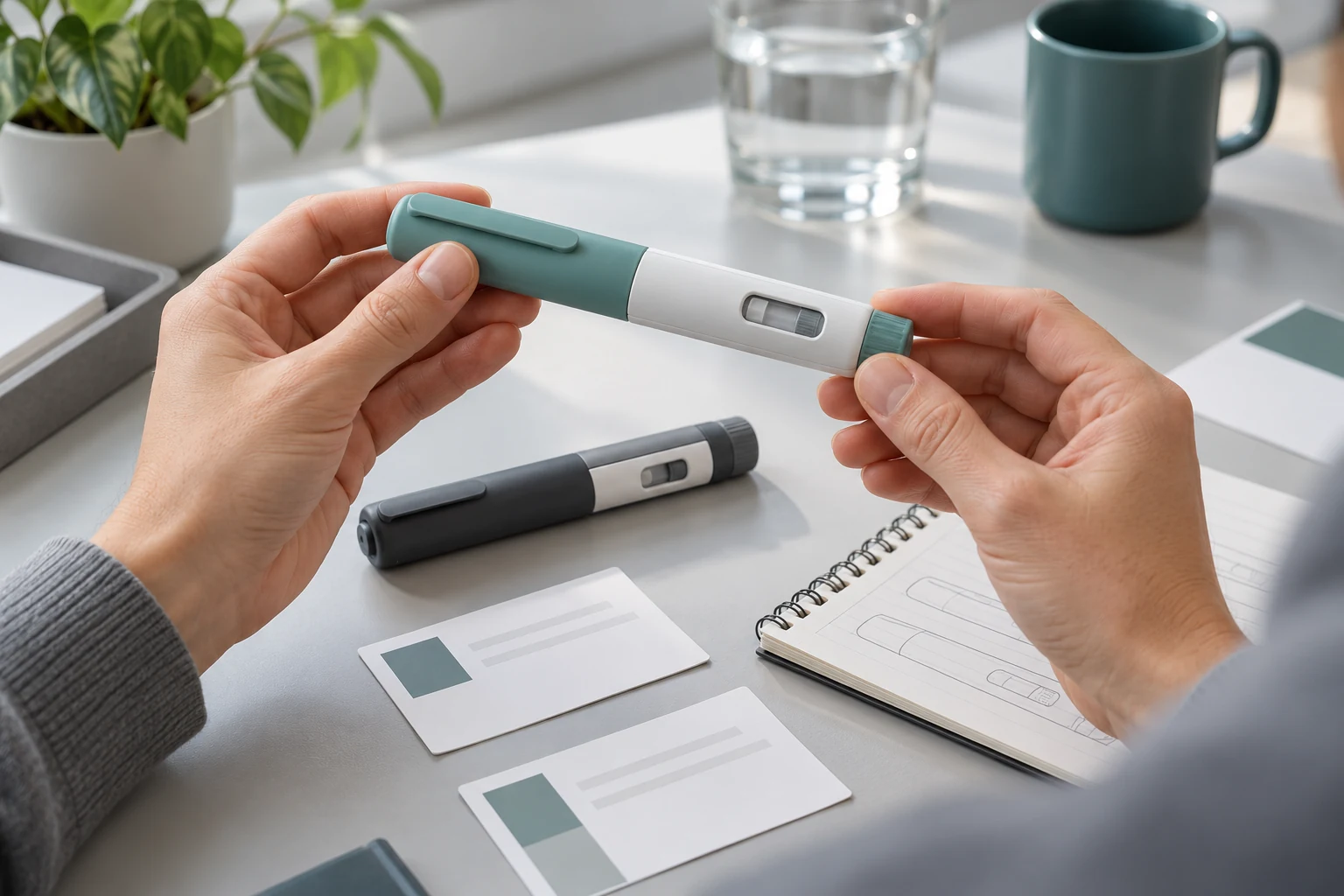
How do user tasks become reviewable requirements?
Map the proposed sequence from product identification and preparation through setting, delivery confirmation and end-of-use handling. A reusable cartridge device may include installation tasks that a prefilled system does not. An autoinjector may automate one action while leaving other actions with the user. For each relevant task, record the information available to the user, the action expected and the consequence of an error. The checklist below illustrates the questions a purchaser can ask; it does not claim that the same critical tasks apply to every pen. Include the physical device, packaging, instructions and any software in the system boundary where they influence the workflow. A display value, click or logged event should have a defined meaning rather than being described as intuitive without supporting evidence. Document which requirements are proposed and which have already been evaluated.
Evidence request checklist
- Intended user groups, environments and training assumptions
- Task sequence and risk-linked critical-task rationale
- Meaning of display, feedback and completion signals
- Device, labeling, packaging and software boundary
- Evaluation purpose, configuration and evidence limitations
- Impact review for interface or instruction changes
What should trigger another usability assessment?
An interface change deserves an impact review even if the underlying mechanism is unchanged. New artwork, contrast, labels, training materials, packaging or software messages can change what a user notices and how a task is interpreted. Ask the development team whether existing usability evidence remains applicable and what further evaluation is justified. Distinguish exploratory or formative work used to improve a design from the evidence intended to support the final configuration. A favorable comment from one sample reviewer cannot replace a planned assessment with appropriate intended-user representation and documented methods. Record limitations and unresolved issues without presenting the illustration on this page as a real study participant or a completed validation session. Close the procurement review by identifying the interface revision, supporting evidence, open questions and ownership of any remaining human-factors work.
Buyer FAQ
Does a larger dose window prove accessibility?
No. It is a proposed interface feature. Its suitability depends on the intended users, tasks and environment and should be assessed within the relevant usability and risk-management work.
Is formative evaluation the same as final validation?
No. Design exploration and improvement activities support different decisions from the evidence for a final configuration. State the purpose, methods, participants and limitations of each evaluation rather than using the terms interchangeably.
Can a private-label artwork change affect usability?
Yes, it can change product identification, contrast or interpretation of instructions. Assess its impact on the intended workflow and determine whether prior evidence still applies before approving the revised configuration.
References and editorial scope
Prepared by Hytanbio Tech for B2B device procurement. Sources checked on 23 October 2026. The purchasing checklists are editorial recommendations, not supplier test data, a regulatory determination or patient-use instructions. Obtain the applicable current documents and project-specific professional assessment.