
Select a transport protocol from the intended distribution route, then define checks for the package and the device inside it. A carton that looks intact after testing does not establish pen function, drug stability or temperature control. Empty-device shipments and filled drug-device products need clearly separated evidence plans.
Describe the shipment before choosing the test
Begin with the physical shipment: loose retail cartons inside a parcel, a mixed freight shipment or a unitised pallet. ISTA describes its 3-Series as general simulation tests, and its public procedure list identifies 3A for parcel delivery packages labelled 150 lb (70 kg) or less. The same list describes 3B for less-than-truckload shipments and 3E for similar packaged products in unitised truckload loads. These are useful scope distinctions when discussing a protocol with a laboratory. Package weight alone does not select the route. Record the handling chain, expected transfers, outer dimensions and shipment configuration. Ask the laboratory to justify its proposal against those inputs. A supplier's existing report may be relevant background, but a different distribution pattern or packout needs an explicit review of coverage.
References: ISTA: Test Procedures, including 3A, 3B and 3E scopes.
Control the entire packout, including the contents
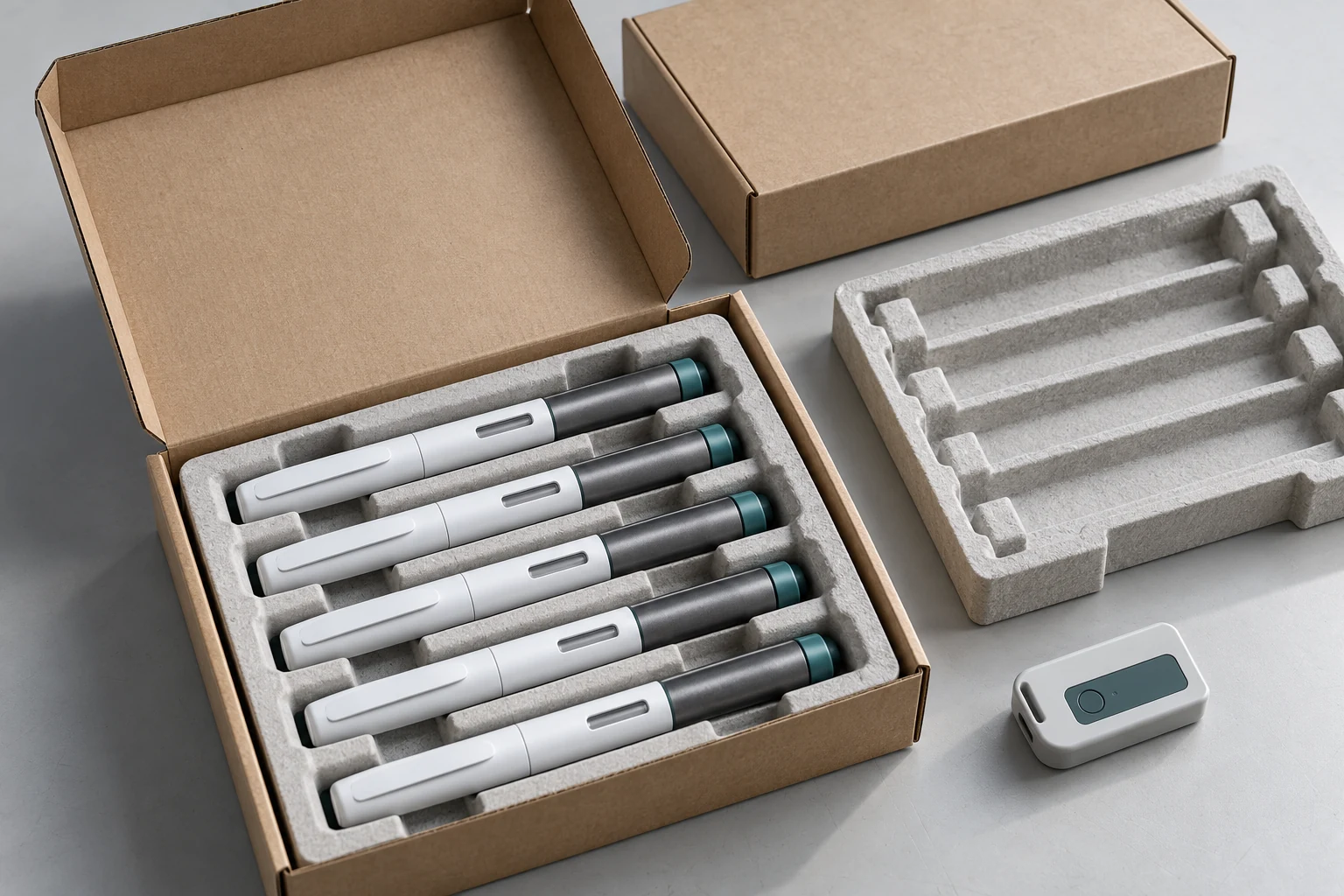
Treat the packout as an assembly with its own revision. Record the number and orientation of pens, caps and accessories, the insert material and geometry, retail-carton structure, outer-carton specification and closure method. Identify any restraint, spacer or protective sleeve that contributes to the result. The laboratory needs representative samples of the actual proposed configuration, not a photograph of a similar presentation box. Include the packed mass and dimensional information in the sample record. Decide how partial cartons or other foreseeable shipping quantities will be represented, and document any rationale for grouping configurations. Keep a copy of the tested packing instruction with the report. Without that record, a later change in insert thickness or product count can leave the buyer unable to establish whether the old result still applies.
Evidence to agree before the shipping study
| Decision | Record | Boundary |
|---|---|---|
| Distribution route | Parcel, mixed freight or unitised shipment | Protocol selection needs a route rationale |
| Packout | BOM, packing instruction, quantities and mass | A different presentation may need review |
| Device checks | Requirements, methods and acceptance basis | External carton condition is insufficient |
| Thermal scope | Product owner and separate temperature plan | Mechanical testing is not stability evidence |
| Release | Report, deviations and configuration sign-off | Limit claims to the assessed configuration |
Inspect pen function after the agreed transport sequence
Define the post-transport checks before testing starts, including which observations or functional failures would prevent acceptance. Visual inspection can document crushed corners, loose components, displaced caps or damaged labels, but the device review should address relevant functional requirements as well. Depending on the configuration and risk assessment, the plan may include dose-setting behaviour, cap retention, activation, leakage assessment or delivered-dose verification. These are proposed review areas, not a mandatory test list for every pen. FDA's injector guidance provides a broader basis for considering injector performance; the protocol owner must select appropriate checks for this shipment and product. Identify the inspection sequence so that one check does not silently alter the sample used for another. Retain sample identifiers and deviations alongside the package observations.
References: FDA: Technical Considerations for Pen, Jet, and Related Injectors.
Keep thermal qualification and medicine stability separate
A mechanical distribution result should not be described as cold-chain qualification. For a filled product, the drug owner needs a documented temperature requirement and a justified assessment of the proposed transport conditions. Packaging, refrigerants, logger placement and the duration of the route can create additional questions for a temperature-control study. For empty OEM device bodies, avoid adding a medicine-storage claim that the shipment does not support. FDA's container-closure guidance discusses packaging protection and compatibility in the context of the particular drug product; it does not make a generic shipping carton suitable for every formulation. State what was assessed, who owns the stability evidence and which temperature-related decisions remain open. A logger in a sample photograph is a planning prop, not evidence that the filled product remained within specification.
References: FDA: Container Closure Systems for Packaging Human Drugs and Biologics.
Review changes before reusing a shipping report
Ask for a documented comparison when the commercial packout differs from the tested one. A revised insert, carton grade, product quantity or shipment route can affect the rationale for using previous evidence. The review should describe the old and new configurations, identify affected requirements and explain whether additional testing is needed. Do not decide solely from the package's external dimensions or the claim that the new material is stronger. In the RFQ, separate packaging development samples from a controlled test shipment and specify the report deliverables. Request photographs before and after the sequence, the packing instruction revision, the selected procedure and edition, any deviations and the agreed post-test results. The final conclusion should identify the supported shipment configuration and its limitations, so purchasing can order the same configuration consistently.
Shipping RFQ inputs
- Specify whether the shipment contains empty devices, trainers or filled drug-device products.
- Provide the route, handling pattern, quantities and controlled packaging drawings.
- Name the owner of post-transport device assessment and any drug-stability assessment.
- Agree what happens if the tested configuration or commercial packout changes.
Frequently asked questions
Is ISTA 3A the correct test for every injection pen shipment?
No. ISTA identifies 3A with parcel delivery packages within its stated scope. Freight and unitised shipment patterns have different procedure scopes. The testing laboratory should justify the selected protocol against the intended distribution route.
Does an undamaged carton prove the pens still work?
No. Package observations and device performance answer different questions. The approved plan should identify the relevant post-transport functional checks and acceptance basis for the specific pen configuration.
Does passing a distribution test validate cold-chain shipping?
A mechanical distribution result does not by itself establish thermal performance or medicine stability. Filled products require a temperature-control and stability assessment appropriate to the drug, route and proposed shipping system.
Can an OEM reuse a report after changing the insert?
The report can be considered only with a documented change-impact review. Compare the tested and proposed packouts and decide whether existing evidence remains applicable or further testing is required.
References and editorial scope
Prepared by Hytanbio Tech for B2B device procurement. Sources checked on 31 October 2026. The checklists and decision tables are editorial recommendations, not a test protocol, legal advice or evidence of Hytanbio certification. Public standard abstracts and USP previews describe scope; full controlled documents and project-specific technical review are needed for execution. No product-specific force, stability, compatibility or approval claim is made.
- ISTA: Test Procedures, including 3A, 3B and 3E scopes
- FDA: Technical Considerations for Pen, Jet, and Related Injectors
- FDA: Container Closure Systems for Packaging Human Drugs and Biologics
- ISTA: Procedure 3A public overview; consult the controlled procedure for execution