
What should be agreed before an injection pen pilot build?
Before authorizing a pilot build, agree which device configuration will be made, which records describe it and who can approve changes. The purchasing order should point to a controlled drawing set and bill of materials (BOM). Record what the pilot is intended to establish: assembly feasibility, inspection readiness or another defined question. Sample approval also needs a stated scope. An accepted color sample tells the supplier which appearance to reproduce; it does not establish delivery performance with a particular cartridge. The checklist below is written for an OEM buyer preparing that handover. It separates the proposed build from later release decisions, so an unresolved container interface or missing test record stays visible. Set acceptance criteria with the responsible engineering and quality teams before work starts, including how deviations will be recorded and resolved.
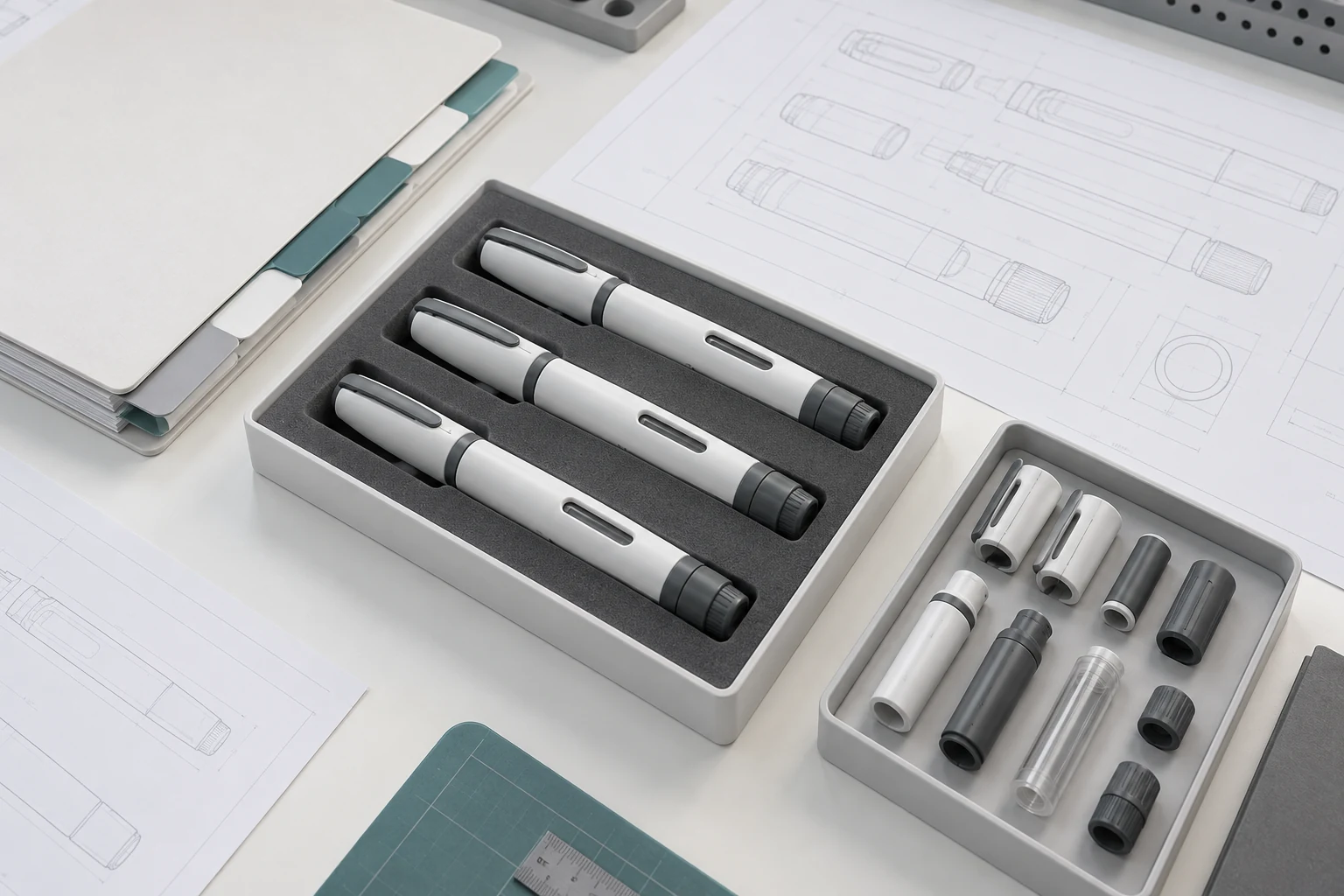
Freeze a build baseline that purchasing and assembly can both identify
Start with a configuration index: the device drawing revision, component list, approved suppliers where relevant and packaging artwork. Each reference should point to a specific version. A folder named final leaves room for disagreement if several files inside have different issue dates. Ask the assembler to confirm which records will be available at the point of use and how replaced versions are withdrawn. Where a component has an unresolved alternative, list it as an open decision with an owner. The pilot plan should explain whether that alternative is being evaluated or is excluded from the build. Apply the same discipline to the primary container and closure components. The final formulation and filled-container responsibilities belong in the supply agreement; they cannot be inferred from an order for empty pen bodies.
Pilot-build handover record
| Decision | Record to identify | Open item to retain |
|---|---|---|
| Configuration | Drawing index, BOM, container and artwork revisions | Unresolved alternative components |
| Sample approval | Sample identity and the question it answers | Differences from the pilot configuration |
| Pilot inspection | Methods, acceptance basis and record forms | Missing or unapproved checks |
| Change authority | Named approvers and escalation route | Temporary concessions and expiry conditions |
Give approved samples a purpose and a revision
An approved reference sample can settle an appearance question if its identity and acceptance scope are recorded. Keep its sample number, associated drawings, approval date and any permitted differences together. Avoid a blanket sign-off that later gets used to answer unrelated questions. A mechanism sample supplied with a substitute container, for example, needs that substitution recorded before its observations are discussed. This is a hypothetical procurement example, not a Hytanbio project result. For the pilot itself, identify how build records will connect each unit or lot to its component configuration. Agree which observations require escalation and who may accept a deviation. If an issue is left open after the build, carry it into the next decision record with its proposed action. Do not silently turn a temporary concession into a permanent specification.
Before issuing the pilot order
- Define the build quantity and its purpose in the pilot plan; do not treat it as a universal OEM MOQ.
- Identify component and container revisions in the order and build record.
- List the inspection records the supplier will return with the pilot units.
- Separate tooling acceptance, sample approval, verification and finished-product release decisions.
- Record who owns drawings, tools and the right to approve a change.
- Carry unresolved issues forward with an owner and a decision date.
Check the quality-system reference without assuming product approval
FDA states that the US Quality Management System Regulation (QMSR) became effective on 2 February 2026 and incorporates ISO 13485:2016 by reference. ISO's public catalog identifies that standard as edition 3, published in March 2016. These are useful reference points when reviewing a supplier's documentation language. They do not establish that a particular supplier is certified or that an injection pen is authorized for a named medicine. Ask which entity and activities a supplied document actually covers. The applicable obligations for a project depend on the product and the parties' roles; have the responsible specialists determine them. The build checklist here is an editorial purchasing aid, not a substitute for the standard, a regulatory assessment or a product-specific evidence plan. Keep any proposed compliance claim linked to a document that can be checked.
Buyer questions
Does approving an appearance sample authorize commercial production?
Only the scope stated in the approval is established. Color, finish or artwork acceptance does not by itself demonstrate delivery performance or complete the evidence needed for a finished-product release. Record the remaining decisions separately.
Can a supplier replace a component during the pilot build?
Set that authority in the agreement. Require proposed substitutions to be recorded and assessed before use, with the relevant approval. The pilot report should identify the configuration actually built and any departure from the agreed baseline.
Does mentioning ISO 13485 show that this pen is approved?
No. Check the supplied document and its scope. A quality-system reference does not establish medicine compatibility or finished-product market authorization. This article makes no certification or approval claim for a Hytanbio platform.
What if the pilot reveals a design problem?
Record the observation against the affected configuration, assign responsibility and agree the next decision. Identify which changes and evidence are needed before another build or release review. Avoid describing an unresolved issue as closed because units have shipped.
Sources and scope
Prepared by Hytanbio Tech for B2B procurement. References checked on 24 October 2026. The handover table and checklist are editorial recommendations, not reported test data or evidence of certification.
- FDA: Quality Management System Regulation, effective 2 February 2026
- ISO: ISO 13485:2016 publication and scope