
Record the old and proposed injection pen configurations, assess which requirements may be affected, then approve the evidence and release plan before using changed parts. A supplier substitution, colour change or tooling adjustment needs a documented impact decision. The necessary work depends on the actual change and product responsibilities; automatic full retesting is not a useful default.
Identify the exact change and the affected stock
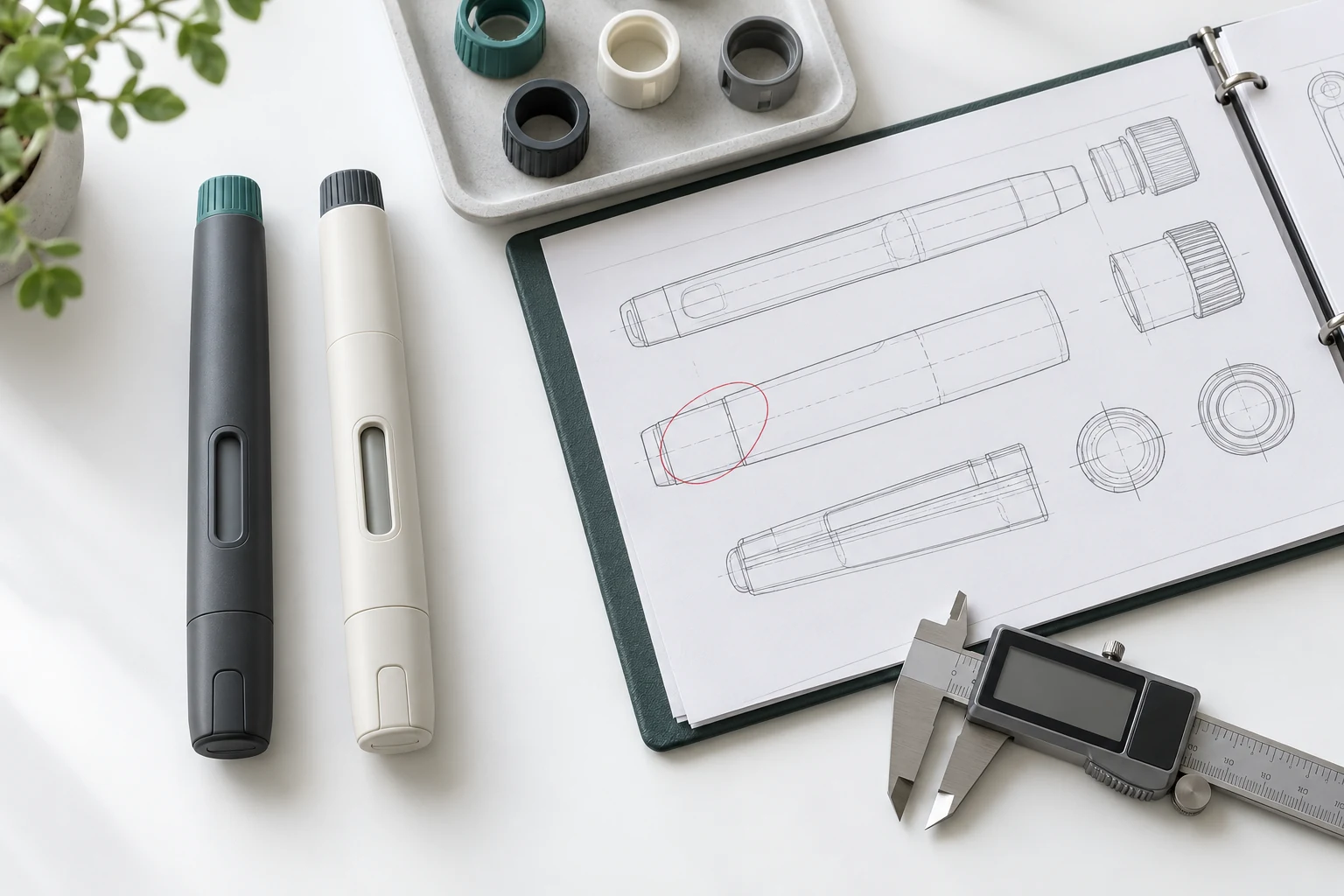
Start a change request with a comparison someone outside the design meeting can understand. Identify the old and proposed drawing revisions, bill of materials, affected suppliers and the reason for the change. State whether the proposal affects only future builds or also work in progress, existing inventory and samples already sent to the buyer. Include the first affected lot or the rule for identifying it. A photograph can show appearance, but it cannot replace a controlled description of dimensions, materials or assembly changes. Keep the approved baseline accessible alongside the proposal. If the supplier cannot describe the difference precisely, the buyer cannot judge whether previous verification remains relevant. This record also gives purchasing a practical way to prevent an unreviewed revision from being treated as an interchangeable repeat order.
Map the change to requirements and existing evidence
Use the device requirements and risk review to decide what the change could affect. A revised cap, for example, can raise different questions from a change to a drive component or formulation-contact closure. Consider mechanical interfaces, user actions, material exposure and packaging where they are relevant to the specific proposal. The review should point to the evidence that is still applicable, explain the basis for retaining it and identify any gaps. Avoid a blanket statement that every change requires full revalidation; equally, avoid accepting a supplier's claim of equivalence without a recorded rationale. Engineering and quality should agree the proposed verification or validation work before samples are released for that purpose. Keep unresolved questions visible in the change record, with a named owner and a decision needed before the affected configuration enters commercial supply.
A usable change-review record
| Stage | Evidence or decision | Owner to identify |
|---|---|---|
| Define | Old/new revisions, reason and affected lots | Design and supply-chain contact |
| Assess | Affected requirements, risks and retained evidence | Engineering and quality reviewers |
| Verify | Approved plan, sample configuration and results | Technical approver and laboratory |
| Regulatory review | Applicable pathway and documented change decision | Authorisation holder or responsible regulatory owner |
| Implement | Effective lot, stock disposition and updated documents | Release authority and buyer contact |
Review supplier substitutions even when the drawing is unchanged
A supplier change can leave the part number and nominal drawing unchanged while altering information relevant to the assessment. Request a comparison of the material specification, processing, finishing and other characteristics relevant to the component. FDA's guidance on changes to an existing device specifically discusses material and processing changes, including changes associated with suppliers, as matters for further evaluation. That guidance addresses the decision about a new 510(k) for devices within its scope; it should not be used as a universal filing rule for all injector or drug-device projects. For procurement, the useful practice is to obtain enough information for the responsible technical and regulatory teams to make their own documented assessment. A vendor assurance that the replacement is equivalent should be supported by the comparison, available evidence and explicit limitations.
References: FDA: Deciding When to Submit a 510(k) for a Change to an Existing Device, October 2017.
Keep quality-system obligations separate from market authorisation
As of this review date, FDA's Quality Management System Regulation took effect on 2 February 2026 and incorporates ISO 13485:2016 by reference into the revised device quality-system framework. FDA states that the QMSR applies to finished-device manufacturers intending commercial distribution, subject to the applicable provisions and exemptions. These facts help a US-market project frame its quality-system discussion; they do not certify an OEM or authorise a particular pen. Establish the parties' roles, product classification and destination-market obligations separately. Where a change may affect an existing marketing authorisation, the responsible regulatory owner must determine the applicable assessment and submission route. Keep that decision linked to the engineering change record. Do not infer that an ISO certificate, an internal quality approval or a component supplier's report automatically resolves the regulatory status of the finished product.
References: FDA: Quality Management System Regulation, effective 2 February 2026.
Approve the implementation and close the evidence gaps
The release decision should identify the approved configuration, effective implementation point, required evidence and disposition of older stock. Update the relevant purchasing and inspection documents so the next shipment can be checked against the same revision. Where additional testing was performed, connect sample identifiers and reports to the revised build; where testing was not needed, retain the approved rationale. Record who may authorise an exception and how an unexpected result returns to the change review. Include customer notification and acknowledgement where the supply agreement requires them. Before closing the change, confirm that open actions have been resolved or are controlled under an explicitly approved plan. A signed change form is useful when it tells production, quality and the buyer what can now be supplied, and what evidence supports that decision.
Questions before accepting a changed batch
- Can the shipment be traced to the approved revision and implementation point?
- Does the change record identify retained evidence and the reason it remains applicable?
- Have material, user-interface and packaging effects been considered where relevant?
- Are customer notification, regulatory review and unresolved actions assigned to named owners?
Frequently asked questions
Does a colour change always require complete injection pen revalidation?
No universal answer applies. Define the actual material, pigment, processing and user-interface changes, then assess their effect on requirements and existing evidence. The approved impact assessment determines the additional work.
Can a supplier substitute a component with the same drawing?
The unchanged drawing does not by itself establish equivalence. The responsible reviewers need a documented comparison of relevant material, processing and performance information, together with the supply agreement's notification and approval requirements.
Does ISO 13485 certification mean an injection pen is FDA approved?
No. Quality-system certification and product market authorisation are different matters. QMSR incorporates ISO 13485:2016 within its applicable US quality-system framework; that does not grant product approval to a supplier or a pen.
When should an OEM buyer approve the revised configuration?
Agree the approval point in the supply arrangement. It should follow the required technical and regulatory review and identify the effective revision, evidence status, affected stock and implementation lot before the changed configuration is accepted for its intended supply purpose.
References and editorial scope
Prepared by Hytanbio Tech for B2B device procurement. Sources checked on 31 October 2026. The checklists and decision tables are editorial recommendations, not a test protocol, legal advice or evidence of Hytanbio certification. Public standard abstracts and USP previews describe scope; full controlled documents and project-specific technical review are needed for execution. No product-specific force, stability, compatibility or approval claim is made.
- FDA: Quality Management System Regulation, effective 2 February 2026
- FDA: Deciding When to Submit a 510(k) for a Change to an Existing Device, October 2017
- FDA: Technical Considerations for Pen, Jet, and Related Injectors